

Why Sound Baths Are Becoming a New Hotel Amenity
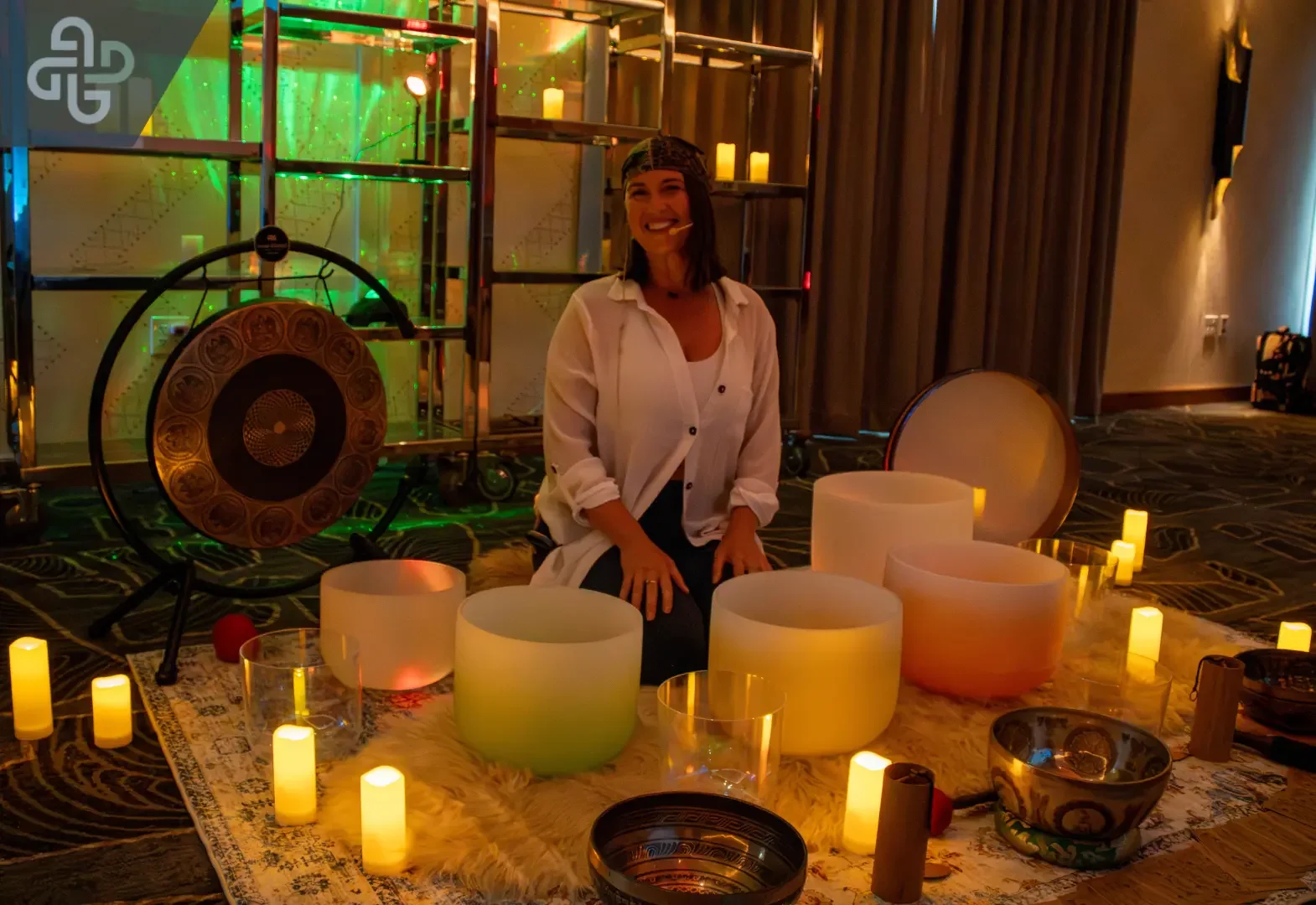
A sound bath hotel amenity is a guided group wellness session in which guests relax while a practitioner plays resonant instruments such as singing bowls, gongs, chimes, and sometimes voice. Hotels are adding them because they need little permanent infrastructure and can turn existing spaces into memorable, low-friction wellness experiences.
First, a useful clarification.
There is no bath.
No water.
No robe required.
A sound bath is closer to a guided listening experience than a spa treatment. Guests settle into a comfortable position while a practitioner builds an evolving soundscape around the room. The appeal for hotels is partly experiential and partly very practical: a sound bath can feel distinctive without requiring a new treatment room, plumbing, or an expensive permanent build-out.
That combination is why sound is showing up more often in hotel wellness programming.
What Is a Sound Bath?
In a typical sound bath, participants sit or lie down while the facilitator plays instruments that create sustained, layered tones.
Common instruments include:
crystal singing bowls
Himalayan singing bowls
gongs
chimes
bells
drums or other percussion
voice, in some sessions
There is usually very little for the guest to "do."
You do not have to know how to meditate.
You do not have to match your breathing to the person next to you.
You do not have to be flexible.
You listen.
That makes sound especially useful in hospitality, where the room may contain a first-time guest, a longtime meditator, a tired business traveler, a couple on vacation, and somebody who only came because their friend booked two spots. The format can hold all of them.
For a broader introduction, The DEN's in-person sound baths at hotel venues show how sound can sit alongside meditation, movement, and other wellness programming.
Why Hotels Are Adding Sound Baths to Their Amenity Mix
Hotels spend a lot of time thinking about space.
What earns revenue?
What sits empty at certain hours?
What can be transformed without permanently changing the property?
Sound baths are interesting because the physical requirements are comparatively light.
They can happen in spaces the hotel already has
A rooftop can host a sunset session.
A ballroom can become quiet after a conference ends.
A suite can work for a private group.
A lawn, terrace, meeting room, or poolside deck may be suitable depending on weather, acoustics, and access.
The room does not need to become a dedicated sound-healing studio. It needs to be comfortable, reasonably quiet, and large enough for the intended setup.
They can serve a group at once
Traditional spa services are intentionally one-to-one. Sound is naturally group-friendly. That means a hotel can offer one facilitated session to dozens of guests at the same time rather than needing a separate practitioner and treatment space for each person. The exact economics depend on the property, provider, room, equipment, and group size, so there is no useful universal "cost per guest" claim.
But the operating model is clearly different from a one-to-one treatment.
The experience is visually distinctive
Rows of mats.
Singing bowls catching the light.
A gong at the front of the room.
A rooftop at sunset.
Sound baths create a visual language that is immediately different from a standard gym or spa amenity. That can help hotels tell the story of their wellness programming in a way guests understand quickly.
The photo matters.
The session matters more.
If the actual experience is weak, no amount of pretty bowls will save it.
The Guest Benefits Hotels Are Betting On
Hotels should be careful with wellness claims. A sound bath is not medical treatment. It should not be marketed as a cure for insomnia, anxiety, jet lag, or any other health condition. What hotels can reasonably offer is an environment designed for rest, attention, and a change of pace. That matters after travel.
It matters after six hours of meetings.
It matters when someone has spent the day moving between airports, rideshares, restaurants, and screens.
Stress and tension
One often-cited study observed 62 adults before and after a singing-bowl sound meditation. Participants reported lower tension, anger, fatigue, and depressed mood after the session. That is interesting. It is not definitive proof that sound baths treat those conditions.
The study was observational rather than a randomized clinical trial, and the broader evidence base is still limited.
For hotels, the takeaway does not need to be "science proves sound healing works."
It can be much simpler: many guests find the format relaxing, accessible, and easy to participate in, and early research gives researchers good reasons to keep studying it.
Sleep and the evening wind-down
An evening sound bath can create a clear transition in the day. Dinner plans are still dinner plans. The minibar is still the minibar. But a scheduled hour of quiet can help guests move out of travel mode before the night begins.
Hotels do not need to promise better sleep to see the value in giving people a calmer pre-bed option.
Shared experience without forced socializing
This may be sound's underrated advantage. A group can share the same experience without having to network.
Nobody needs an icebreaker.
Nobody needs a partner exercise.
Nobody has to tell a stranger what they are grateful for.
For corporate groups, couples, friends, or even solo travelers, that can feel refreshingly easy.
Where Sound Baths Fit Into a Hotel's Programming Calendar
A sound bath does not need to happen every night to become part of a hotel's identity.
A few formats tend to make sense.
Evening wind-down sessions for in-house guests
This is the simplest. Choose a consistent evening time and let guests know during pre-arrival, check-in, or through in-room messaging. The event becomes part of the stay without requiring people to build their day around it.
Weekend residencies open to guests and locals
Recurring public sessions can help a hotel build a local audience while still serving overnight guests.
The DEN currently works with hotel partners across California, with public programming in places including West Hollywood, Santa Monica, Long Beach, Menlo Park, and Palm Springs.
A residency makes the experience easier to market because people know it will happen again.
Corporate groups and private buyouts
Sound works especially well at the edges of a business agenda.
Before the first session of the day.
After the final meeting.
Between an afternoon workshop and dinner.
It gives a group a transition that does not require another conversation.
Hotels can also host a private sound bath at your property for company offsites, celebrations, retreats, and brand events.
Seasonal and destination moments
The setting can do some of the work.
A desert sound bath at sunset feels different from one on a coastal rooftop.
A winter indoor session feels different from a summer poolside event.
Properties in places such as Palm Springs can use landscape and season to make recurring programming feel specific to the destination rather than imported from anywhere.
What a Hotel Needs to Host a Sound Bath
The checklist is shorter than many teams expect.
A quiet-enough space
"Quiet" is relative.
You do not need a recording studio.
You do need to think about the bar downstairs, a ballroom next door, housekeeping traffic, elevators, pool music, street noise, and any other sounds that could compete with the session.
Comfortable flooring and support
Guests may lie down or sit for much of the session.
Depending on the room, that may mean mats, blankets, pillows, backjack chairs, or other support.
Hard marble looks beautiful.
It is less charming after forty minutes.
A realistic group size
Capacity should be based on comfort, not the maximum number of bodies that can technically fit in the room.
Leave space for practitioners, instruments, entry and exit, accessibility, and safe movement.
Setup and breakdown time
Bowls, gongs, mats, blankets, lighting, check-in materials, and room resets do not appear by themselves.
Give the practitioner enough time to prepare without turning setup into part of the guest experience.
The right facilitator
A beautiful instrument collection does not make someone a good group facilitator.
Look for experience working with groups, clear communication, professional boundaries, practical event awareness, and the ability to adjust to beginners.
You can meet our sound practitioners to get a sense of the range of backgrounds and approaches within The DEN community.
How to Bring Sound Baths Into Your Property
Start with the property, not the trend.
What time of day needs programming?
Who is the audience?
How many people can the space actually hold?
Is the goal a guest amenity, a public residency, a private group offering, or a seasonal activation?
Then choose the provider.
A good partner should help with more than showing up with bowls.
They should be able to discuss room layout, timing, guest experience, equipment, facilitator fit, capacity, and how the session sits alongside the hotel's existing operation.
Sound can also live beside other practices. Some properties combine it with breathwork and meditation, movement, or a wider wellness calendar rather than treating it as a standalone novelty.
The Global Wellness Institute continues to document growth across wellness tourism and mental wellness. Hotels do not need to chase every wellness trend that appears inside that growth.
They do need to notice which experiences fit hospitality unusually well. Sound baths do.
They are simple for the guest.
Flexible for the property.
And when the room is held well, memorable for reasons that have very little to do with how much infrastructure was required.
To experience one first, browse The DEN's class schedule. To explore a hotel program, private event, or residency, get in touch about a private sound experience.
Frequently Asked Questions
What is a sound bath and what happens during one?
A sound bath is a guided listening experience. Participants usually sit or lie comfortably while a practitioner plays resonant instruments such as singing bowls, gongs, and chimes. The session may also include brief meditation guidance or silence. There is no water involved, and no previous meditation experience is required.
Why are hotels offering sound baths?
Sound baths are relatively flexible to host, can serve groups, and work in existing spaces such as rooftops, ballrooms, meeting rooms, terraces, and lawns. They also give hotels a distinctive wellness experience that can serve overnight guests, locals, corporate groups, and private events.
How long does a hotel sound bath session last?
Many sound baths are around 45 to 60 minutes, although private and event formats can be shorter or longer. Hotels should also allow time before and after for guest arrival, room setup, facilitator preparation, and a calm transition out of the session.
What should guests wear and bring to a sound bath?
Comfortable clothing is usually enough. Depending on the venue, the hotel or provider may supply mats, blankets, pillows, or back-support chairs. Guests generally do not need special equipment. The event listing should clearly explain what is provided so people are not guessing before they arrive.
What space does a hotel need to host a sound bath?
The best space is quiet enough for subtle instruments to be heard, comfortable enough for guests to sit or lie down, and large enough to leave room around participants and the facilitator. Event rooms, rooftops, terraces, lawns, ballrooms, suites, and pool decks can all work with the right setup.