

What Is Reiki? How Energy Healing Explained
What Is Reiki? How Energy Healing Works and What to Expect
A lot of people first hear about Reiki when they are already tired.
Not dramatic, life-falling-apart tired. Just the quieter kind. The kind where your body feels tight, your mind will not settle, and rest does not really feel like rest anymore.
That is often when Reiki starts to make sense.
Not because it promises some big miracle. Usually, it is the opposite. It feels simple. Gentle. Slower than most things people try when they are overwhelmed. Cleveland Clinic describes Reiki as an energy-healing practice that many people experience as calming and therapeutic, while also being clear that it should not be used in place of conventional treatment.
What is Reiki?
Reiki is a Japanese energy healing practice. In a session, the practitioner typically places their hands lightly on the body or hovers them just above it. The aim, depending on the tradition and practitioner, is to support the body’s natural sense of balance and help the nervous system shift out of stress. Cleveland Clinic describes Reiki in similar terms, and NCCIH classifies it as a complementary health approach.
That last part matters.
Reiki sits in the world of complementary wellness, not conventional medicine. So when people talk about Reiki therapy or Reiki healing, it is better to think of it as a supportive practice. Something people may use alongside therapy, medical care, rest, and other forms of support. Not instead of them.
How does Reiki energy healing work?
This is where the conversation splits a little.
Within Reiki practice, the common explanation is that the practitioner works with life force energy and helps direct or support its flow. Cleveland Clinic explains that Reiki is understood by practitioners as channeling subtle energy through the hands to support balance in the body and mind.
From a scientific point of view, the picture is different. NCCIH says there is no scientific evidence supporting the existence of the energy field thought to play a role in Reiki, and it also says Reiki has not been clearly shown to be effective for any health-related purpose because the research has generally been low quality or inconsistent.
Both of those things can be true at once in how people talk about Reiki today.
Many people still seek Reiki energy healing because the experience itself can feel calming, supportive, and meaningful. The practice may matter to someone even if the mechanism is not scientifically confirmed. That is part of why Reiki has stayed in wellness spaces for so long.
What does Reiki feel like?
This is probably the most common beginner question, and the honest answer is that it varies.
Some people feel warmth. Some feel heaviness in a good way, like the body finally letting go. Some feel almost nothing dramatic at all, but leave more settled than they arrived. Cleveland Clinic says people often describe Reiki as deeply calming, and The DEN frames Reiki sessions around a gentler shift out of constant alertness and into more steadiness.
That is important to say because people sometimes expect fireworks.
Usually, it is subtler than that.
A Reiki session can feel more like your system softening than your life changing in one hour. And honestly, that is often why people return to it.
What to expect in a Reiki session
A first session is usually very simple.
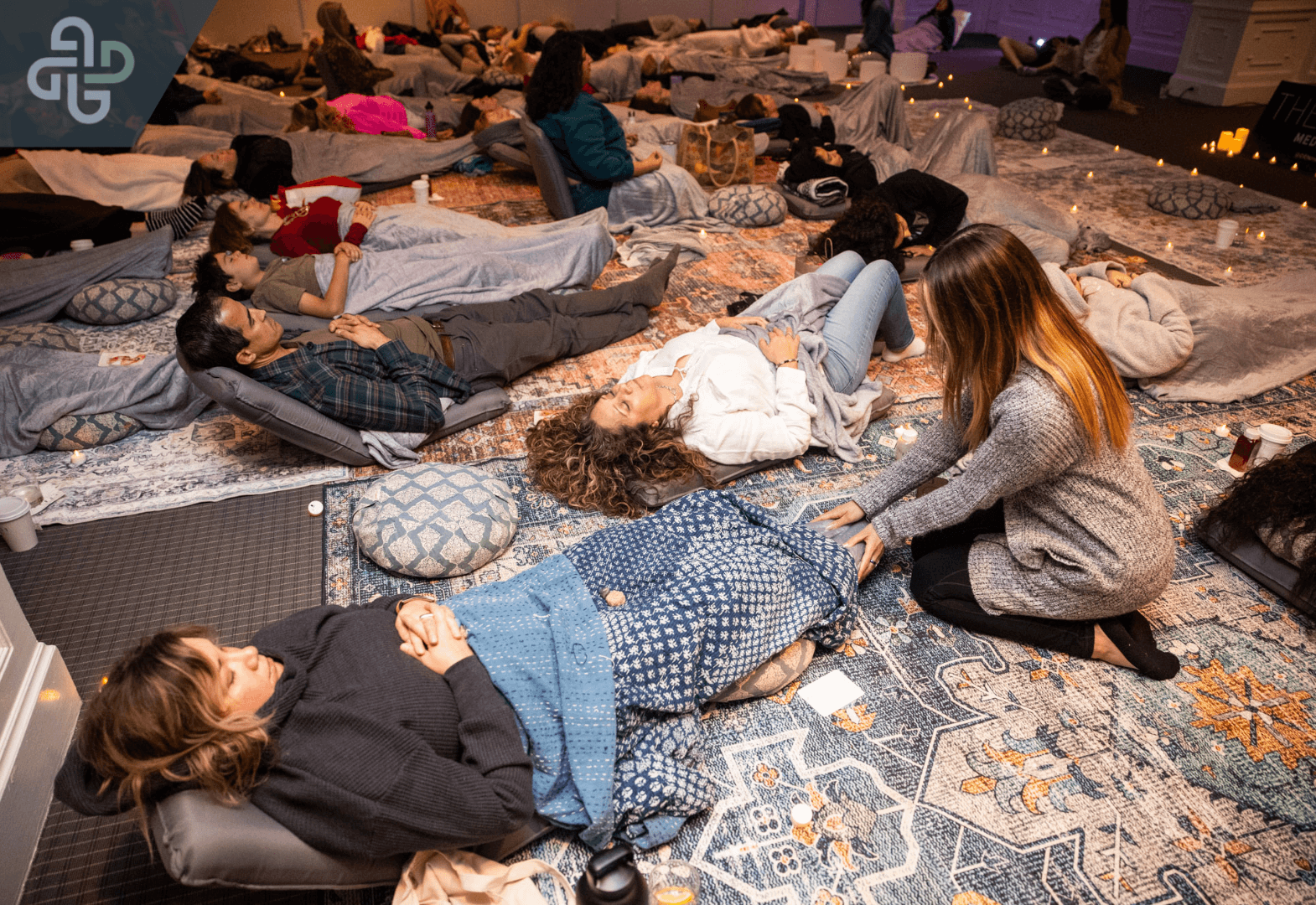
You stay clothed. You lie down or sit comfortably. The practitioner may place their hands lightly on specific areas or hover them just above the body. The room is generally quiet and slow. Some people talk briefly before or after. During the session itself, there is usually not much to “do.” Cleveland Clinic and The DEN both describe Reiki as gentle and non-invasive, with in-person and online formats available at The DEN.
A typical session may include:
a short check-in
time on a table, chair, or mat
light touch or no-touch hand placements
a quiet close and a few minutes to come back slowly
That simplicity is part of the appeal. Reiki does not ask a lot from you in the moment. You do not have to be good at meditation. You do not have to explain yourself perfectly. You mostly just need to show up and let the pace change.
Does Reiki actually work?
This depends on what someone means by “work.”
If the question is whether Reiki is scientifically proven to treat specific medical conditions, NCCIH’s answer is basically no. It says Reiki has not been clearly shown to be effective for any health-related purpose, and the evidence so far is mixed and limited.
If the question is whether people sometimes feel calmer, more relaxed, or more supported after a session, that answer is often yes. Cleveland Clinic notes that Reiki may bring on a state of calmness and relaxation, and that is usually the most grounded way to talk about it. Not as a cure. Not as a substitute for care. As a practice, some people find it helpful for settling their system.
That is also the tone the DEN takes. Its Reiki pages describe the work as gentle, non-invasive, and supportive of calm and nervous system regulation, rather than making inflated promises.
Is Reiki safe?
According to NCCIH, Reiki has not been shown to have harmful effects. Cleveland Clinic also describes it as gentle and non-invasive.
That said, safe does not mean “use it for everything and skip real care.” Reiki is best approached as a complementary practice. If someone is dealing with a medical condition, significant mental health symptoms, or pain that needs evaluation, Reiki should sit beside proper care, not replace it.
Can Reiki be done remotely?
Yes. Remote Reiki is a real offering in many wellness spaces, including The DEN, which offers both in-person and online Reiki sessions.
Whether someone connects with remote work is personal. Some people love the convenience and privacy of it. Others prefer being in the room. Neither response is wrong. It usually comes down to what helps you relax enough to receive the session in the first place. The useful part is that there is room for both options now.
How many Reiki sessions do you need?
There is no universal number.
Some people book one session because they are curious. Some come back when life feels loud again. Others like a more regular rhythm for a period of time. The DEN offers Reiki as both an individual healing session and a broader learning path through trainings, which reflects how differently people approach it.
That is probably the most honest answer here. Reiki is not usually framed like a strict treatment plan. It is more about whether the practice feels supportive enough to continue.
How much does Reiki cost?
If you are searching for how much Reiki costs, the practical answer is that it varies a lot by format, teacher, location, and session type. A private one-on-one session, a remote session, a class, and a corporate event are all different experiences, so they are not usually priced the same way. The DEN, for example, offers Reiki through private healing sessions, trainings, on-demand learning, and workplace wellness formats.
What matters more than chasing the lowest number is knowing what you are booking. Is it a private session? A certification? An online course? A group experience? Once that is clear, pricing makes a lot more sense.
Learning Reiki for yourself
A lot of people start with a session. Some eventually want to go deeper.
That is where training comes in. The DEN offers ways to learn Reiki, continue into advanced Reiki training, become a Reiki master, or start with an online Reiki course. Its training pages describe Reiki Level 1 as a beginner-friendly two-day certification and its on-demand option as a way to complete Reiki Level 1 and receive attunement with a Reiki Master.
For some people, Reiki remains a personal self-care tool. For others, it becomes part of how they support friends, clients, or communities. There is room for both.
If you want more context around the softer side of the practice, The DEN also has a piece on the benefits of Reiki healing. And if you are exploring wellness programming at work, there is also Reiki for workplace settings through Reiki for corporate events.
Conclusion
So, what is Reiki?
At its core, it is a quiet practice. Hands placed lightly or held just above the body. A little less doing. A little more receiving. For some people, that alone is what makes it powerful.
It is not something you have to believe in blindly. It is also not something science has clearly validated as a medical treatment. But it is a practice many people return to because it helps them feel calmer, steadier, and a little more connected to themselves.
That is a modest claim. It is also enough.
FAQ
What does Reiki feel like?
Many people describe Reiki as warm, calming, or deeply settling. Some feel heaviness or emotional release. Others feel very little during the session but notice afterward that they are less tense. Cleveland Clinic says people often experience Reiki as calming and therapeutic, but the experience varies from person to person.
Does Reiki actually work?
If by “work” you mean scientifically proven medical effectiveness, NCCIH says the evidence is limited and inconsistent, and Reiki has not been clearly shown to work for any health-related purpose. If you mean “can people feel calmer or more relaxed afterward,” many do report that kind of benefit.
How many Reiki sessions do you need?
There is no standard number. Some people try one session and stop there. Others come back regularly because they like how it feels. It depends on your goals, your budget, and whether Reiki feels supportive enough to become part of your routine.
Can Reiki be done remotely?
Yes. Remote Reiki is offered by many practitioners, including The DEN, which offers both online and in-person Reiki sessions. Some people prefer being in the same room as the practitioner, while others like the privacy and convenience of receiving Reiki from home.
Is Reiki safe?
NCCIH says Reiki has not been shown to have harmful effects, and the Cleveland Clinic describes it as gentle and non-invasive. It is still best used as a complementary practice, though, not as a replacement for medical or mental health care when that care is needed.