

Akashic Records Explained: Beginner’s Guide
If you have been curious about the Akashic Records, you are probably not looking for a textbook answer.
You are probably trying to understand why people turn to them in the first place.
Not in a vague, mystical way. In a real way. What are people actually doing when they say they are opening the Records? What do they hope to find there? And why does the idea stay with people, even if they are brand new to spiritual work?
The simplest place to start is this: the Akashic Records are approached as a spiritual tool for insight. Some people think of them as a kind of soul archive. Others describe them as a field of wisdom, memory, and guidance. Britannica traces the term to occult and esoteric traditions, where the Akashic record is described as a compendium of memories or records impressed upon a subtle plane beyond ordinary senses. A scholarly article on the topic also notes that the term grew out of the Sanskrit word akasha after it was adopted and reworked by the Theosophical tradition.
What are Akashic Records?
In simple terms, the Akashic Records are believed to hold information about the soul’s journey.
That may include past patterns, present questions, emotional themes, relationships, and what many practitioners describe as deeper soul lessons. At The DEN, Akashic Records training describes the Records as an energetic record of space, time, dimensions, and possibilities, and frames the practice as a way of receiving guidance, healing, and insight.
That language is spiritual, not scientific. And that distinction matters.
The Akashic Records are not something science has confirmed as a measurable system or proven field. They belong to a spiritual and esoteric framework. That does not make the experience meaningless for the people who work with it. It just means it is better understood as a spiritual practice than a scientific one.
Why do people turn to the Akashic Records?
Usually, people do not seek out an Akashic Records reading because they want more information.
They do it because something in their life feels stuck, confusing, repetitive, or emotionally loud.
Maybe a relationship pattern keeps repeating. Maybe they feel pulled in a direction they cannot explain. Maybe they are doing a lot of inner work already and want a framework that feels more spiritual than analytical.
That is where the Records often come in. People use them for reflection, clarity, and what they experience as Akashic Records healing. Not because they expect a neat answer to every question, but because the process can help them look at their life from a different angle.
And honestly, that is part of the appeal. The practice gives people space to ask bigger questions than they might ask in everyday life.
How to access Akashic Records
This is the question almost everyone asks next.
How to access Akashic Records if you are a beginner?
The short answer is that people usually approach the Records through intention, prayer, meditation, and a structured opening process. Some learn through self-practice. Some work with a teacher. Some begin with a guided reading before trying to do it themselves.
A beginner's path often looks like this:
get quiet enough to focus
set a clear intention or question
use a prayer, invocation, or opening method
listen without trying to force an answer
write down what comes through
That may sound simple, but it is not always easy at first. The hardest part is usually not technique. It is trust.
People often expect a dramatic spiritual download. Sometimes that happens. Often it does not. Sometimes what comes through feels subtle. A phrase. A clear feeling. A pattern you had not fully admitted to yourself. A sense of relief around something you have been overworking mentally.
That is why the Akashic Records for beginners usually work best when they are approached gently, without trying to perform the experience.
What happens when you access your Akashic Records?
There is no single script for this.
For some people, accessing the Records feels calm and clear. For others, it feels emotional. Some people feel deeply held. Some feel like they are hearing the truth in a way they have been avoiding. Some simply leave with one useful insight and a little more peace than they had before.
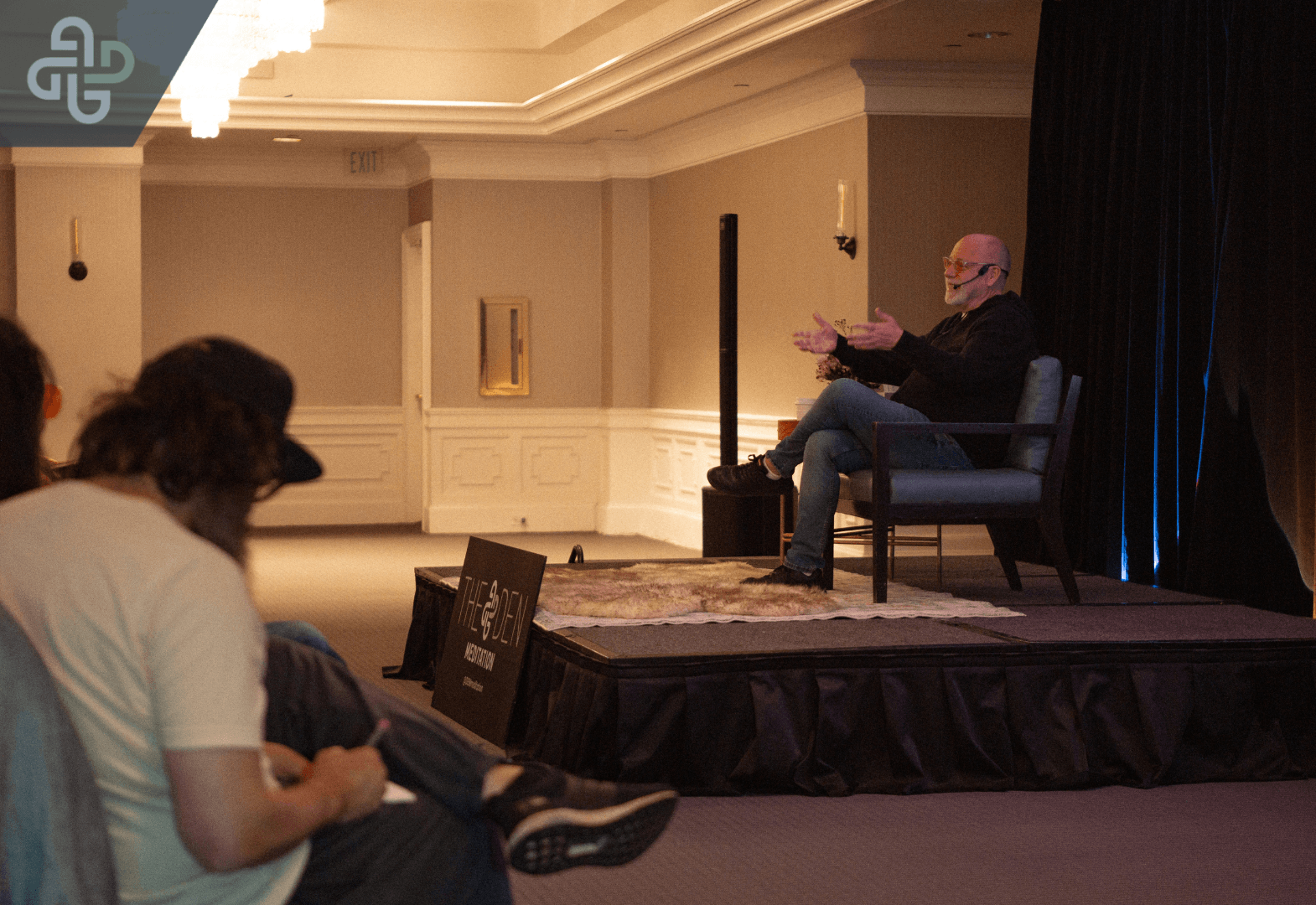
At The DEN, Level 1 training is an immersive introduction to opening the Records for yourself and others, while Level 2 expands into deeper work, including ancestral healing, inner child reconnection, and Akashic past-life regression. That gives a good sense of how many practitioners understand the work. It is not only about getting answers. It is also about relationships, healing, and spiritual development.
So if you are wondering what happens when you access your Akashic Records, the honest answer is this: usually, you meet yourself a little more clearly.
Not always comfortably. But often meaningfully.
How do you learn to read the Akashic Records?
Some people begin alone with meditation and prayer. Others prefer structure.
If you are brand new to this work and simply want to feel into it first, you can start gently. The DEN’s Virtual Studio includes Nia’s weekly class, which can be a helpful way to try an intro meditation and get a sense of her teaching style before stepping into a full training.
That kind of first step matters. You do not have to jump straight into certification if you are still exploring. Sometimes one guided meditation is enough to help you understand whether the practice feels aligned, grounded, or meaningful for you.
If you already know you want deeper guidance, a training, or certification can help because it gives the practice a container. That is especially useful if you are trying to learn how to read Akashic Records, how to open Akashic Records, or hold space for others responsibly.
The DEN offers Akashic Records certification as a Level 1 training with Nia Ostrand, and advanced Akashic Records training for people who want to go deeper into practices like past life regression, lineage healing, and advanced channeling.
That kind of path makes sense for people who want more than curiosity. It gives them a way to build steadiness, language, and discernment over time.
Is it connected to other spiritual practices?
Very often, yes.
People who feel drawn to the Records are often also interested in intuitive healing, meditation, channeling, or past life work. At The DEN, Level 2 training directly connects Akashic work with past life regression, and that overlap is not surprising. Both practices tend to attract people who are looking for meaning beneath surface-level patterns.
It can also become part of deepening your spiritual practice. Not in a performative way. More in the sense of learning how to listen to yourself differently.
A good way to think about it
If the Akashic Records feel intimidating, it may help to stop thinking of them as something you have to master all at once.
A better way to hold the practice is this:
It is a spiritual conversation.
Not always literal. Not always dramatic. But a conversation between your questions and a deeper layer of meaning.
That is part of why people come back to it.
Conclusion
The Akashic Records are not for everyone, and they do not need to be.
But for people who feel drawn to them, the pull usually makes sense. They offer a way to slow down, ask bigger questions, and explore life from a spiritual point of view that feels personal rather than abstract.
If you are just starting, you do not need to have the whole map figured out. You can begin with curiosity. You can begin with one honest question. And if you want a more guided path, exploring Akashic Records certification or advanced Akashic Records training can be a grounded next step.
FAQ
What are the Akashic Records in simple terms?
In simple terms, the Akashic Records are understood as a spiritual record of the soul’s journey. Many practitioners see them as a space for guidance, reflection, and healing rather than as a physical archive. The idea comes from esoteric traditions, not from scientific research.
Can anyone access the Akashic Records?
Many teachers and practitioners say yes, anyone can learn to access the Records with practice, intention, and the right framework. That said, beginners often find it easier to start with a guided reading or structured training so they can build trust and understand the process more clearly.
What does an Akashic Records reading feel like?
It can feel calm, emotional, clarifying, or surprisingly subtle. Some people experience a strong sense of connection. Others simply leave with one insight that lands deeply. It usually feels less like “getting magical answers” and more like seeing your life through a more spacious spiritual lens.
Are the Akashic Records scientifically proven?
No. The Akashic Records are part of spiritual and esoteric traditions, not something established by scientific evidence. People may still find the practice meaningful or healing on a personal level, but it is more accurate to describe it as a spiritual framework than a proven scientific system.
How long does it take to learn Akashic Records reading?
That depends on the person. Some people begin with one reading and start sensing the process quickly. Others prefer a longer learning path with repeated practice, guidance, and structure. Training sessions like Level 1 and Level 2 are designed to give that process more shape over time.
How can beginners try the Akashic Records without committing to training?
Beginners can start with a guided meditation, a reading, or an introductory class. At The DEN, Nia’s weekly class on the Virtual Studio can be a gentle first step for anyone who wants to experience the energy of the work before joining a full Akashic Records training.