

What Happens During a Live Meditation Class? A Beginner's Guide
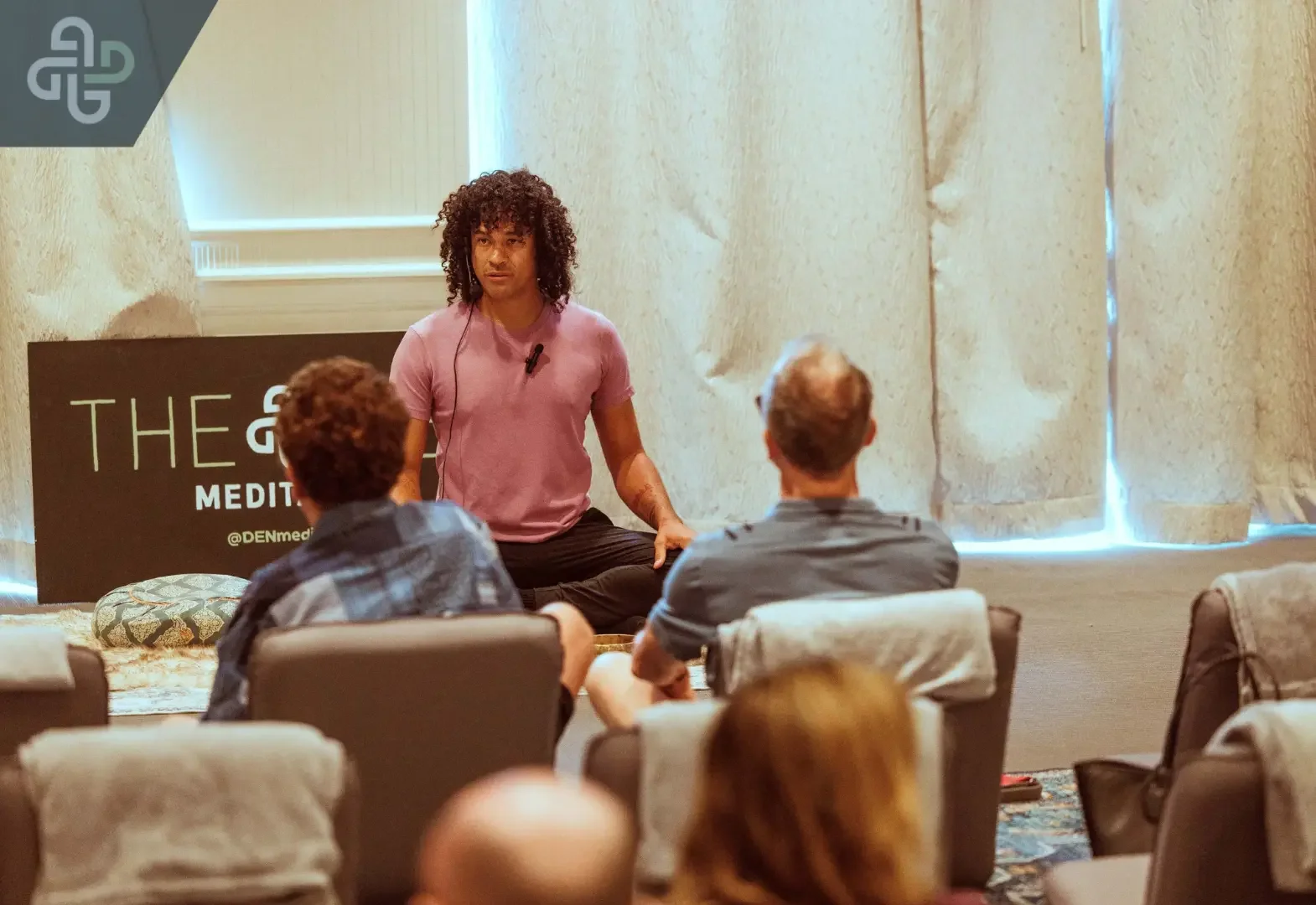
Most people are not nervous about meditation itself.
They are nervous about not knowing what they are walking into.
That is fair.
If you have never joined a live class before, even a virtual one, the small questions can start to pile up. Do you have to talk? Will everyone see you? What if you cannot focus? What if your dog barks, your mind wanders, or you feel awkward the whole time?
The answer is simpler than the worry.
A live class is usually calm, guided, and much easier to enter than people expect. You are not there to perform. You are not there to prove you are peaceful. You are there to take a pause and let someone guide you through it.
What Is a Live Meditation Class?
A live meditation class is a meditation session led by a teacher while it is happening.
That is the main difference.
You are not pressing play on a recording. You are joining a class with a real person guiding the room in real time. Sometimes the class is focused on breath. Sometimes it is mindfulness, body awareness, grounding, rest, or a theme like stress, sleep, or emotional reset.
In an online meditation class, you usually join from home or wherever you are. In a virtual meditation class, the teacher still holds the structure, even though everyone is in their own space.
That structure matters.
You do not have to decide what to do, how long to sit, or what kind of meditation to choose. The class is already there. You just step into it.
Before Class: How to Prepare
You do not need much.
Really.
You do not need a cushion, a special outfit, or a room that looks like a retreat center. If you have a quiet corner, great. If not, use what you have. A chair, a bed, a yoga mat, or even the floor can work.
Before class, it helps to:
join a few minutes early
put your phone on silent
wear something comfortable
sit or lie down somewhere you can relax
keep water nearby if you want it
let the people around you know you are taking a short class
If you are joining a Zoom meditation class, check your sound before the class starts. That is really the only technical part.
The goal is not to create the perfect environment. The goal is to make it easy enough to begin.
What Happens During the Session?
Most classes follow a simple rhythm.
First, the meditation teacher welcomes everyone. They may say a few words about the focus of the class or invite you to settle into your space.
Then the practice begins.
You might be guided to notice your breath. You might scan the body. You might listen to a short reflection. You might sit with silence for a few moments while the teacher checks in through gentle cues.
A typical guided meditation session may include:
a short arrival
breathing or grounding
guided awareness
a few quiet pauses
a closing moment to come back slowly
That is usually it.
You are not expected to speak. You are not expected to share anything personal. You do not need to have a big emotional moment. Some classes feel deep. Some feel simple. Some just help you feel a little less tense than when you started.
That still counts.
Do You Need Experience to Join?
No.
A beginner meditation class is meant for people who are still learning. And honestly, even people who have meditated for years still get distracted. They still have busy minds. They still have days when sitting still feels harder than usual.
So if you are wondering whether meditation for beginners includes you, it does.
You can join if:
you have never meditated before
you have tried apps but never a live class
you get distracted easily
you feel unsure about what to do
you do not know the “right” way to sit
you simply want someone to guide you
A good teacher will not expect you to arrive calm.
Most people come to meditation because they are not calm yet.
Common Concerns First-Time Participants Have
The first class usually feels more intimidating before it starts than after it begins.
Here are a few worries that come up often.
What if I cannot focus?
Then you are normal.
Meditation is not about keeping the mind blank. The mind wanders. That is what minds do. The practice is noticing that it wandered and coming back, gently, without turning it into a problem.
Do I need to keep my camera on?
Usually, no.
Many people keep their camera off during a virtual class, especially at first. Some turn it on because it helps them feel more present. Either way, the focus is on your practice, not on being watched.
What if I feel awkward?
You might, for a minute.
That is okay. New things feel strange at first. Once the teacher starts guiding, most people settle in more quickly than they expected.
What if I do not feel anything?
That is also fine.
Not every class has to feel profound. Sometimes the shift is small. You breathe a little slower. Your shoulders drop. Your mind gets a little quieter. That is enough.
Benefits of Practicing With a Live Teacher
This is where live classes can feel different from practicing alone.
A teacher gives the class a shape. You are not trying to guide yourself while also figuring out if you are doing it right.
That helps.
A live teacher can:
make the practice feel less confusing
help beginners settle in
create a sense of pace and safety
offer reminders when the mind wanders
make meditation feel more human
A live mindfulness class can also help with consistency. When a class has a real time and a real teacher, it becomes easier to show up. You do not have to negotiate with yourself for twenty minutes about whether to meditate today.
The class is there.
You join.
That simple structure can make a big difference.
How to Find the Right Meditation Class for You
Not every class will feel the same.
Some classes are quiet and slow. Some are more grounded. Some feel more spiritual. Some are practical and direct. Some teachers speak more. Some leave more silence.
It may take a few tries to find what feels right.
When you are choosing a class, notice:
Does the time work for your real schedule?
Does the class title feel approachable?
Does the teacher’s style feel comfortable?
Do you want something calming, reflective, or more structured?
Do you want live support or something you can do later on demand?
You can start by checking the meditation class schedule, browsing the meditation teachers, or using on-demand meditation sessions when live timing does not fit your day.
There is no need to find the perfect class right away.
Pick one that feels easy enough to try.
Conclusion
A live meditation class is not as complicated as it may seem from the outside.
You join. You get comfortable. A teacher guides you. Your mind wanders. You come back. The class ends, and maybe you feel a little more settled than before.
That is the practice.
You do not need to be experienced. You do not need to be calm before you begin. You do not need to know all the language or do anything impressive.
You just need a place to start.
If you are curious, choose one class from the meditation class schedule, explore a few meditation teachers, or try the on-demand meditation sessions when your schedule is full.
The first class does not have to change everything.
It just has to help you begin.
FAQ
What happens in a live meditation class?
In a live meditation class, a teacher welcomes the group, helps everyone settle, and guides the practice in real time. You may be led through breathwork, body awareness, mindfulness, or quiet reflection. Most classes are simple, calm, and easier to follow than beginners expect.
Can beginners join a live meditation class?
Yes. Beginners can join a live meditation class even if they have no experience. A good teacher will guide the class clearly and help you understand what to do. You do not need a quiet mind or a perfect setup before starting.
Do I need to keep my camera on?
Usually, no. Many people keep their camera off during a Zoom meditation class, especially when they are new. Some turn it on because it helps them feel present. Choose the option that helps you feel comfortable enough to practice.
What if I have trouble focusing during meditation?
That is completely normal. Meditation is not about perfect focus. It is about noticing when your mind has wandered and gently coming back. Every time you return to the breath, body, or teacher’s guidance, you are practicing.
How long are live meditation classes?
Class length can vary, so it is best to check the schedule before joining. Some classes are shorter and easier to fit into a busy day, while others give you more time to settle. Choose a class length that feels realistic for where you are right now.