

Why Live Meditation Classes Feel Different Than Meditation Apps
Meditation apps made a lot of people feel like meditation was finally within reach.
That mattered.
For a long time, meditation could seem like one of those things other people did. People with quieter lives. More time. Better routines. Less stress. Then apps came along and made it feel simple. came along and made it feel simple. You could try it at home, in bed, between meetings, while traveling, whenever.
That changed a lot.
But once people get past the first stage of trying meditation, a different question usually shows up. Not “Can I access this?” but “Why do I keep falling out of it?”
That is where live classes start to feel different.
What Are Live Meditation Classes?
A live meditation class is guided by a real teacher while the class is actually happening.
That may sound obvious, but it changes the whole experience.
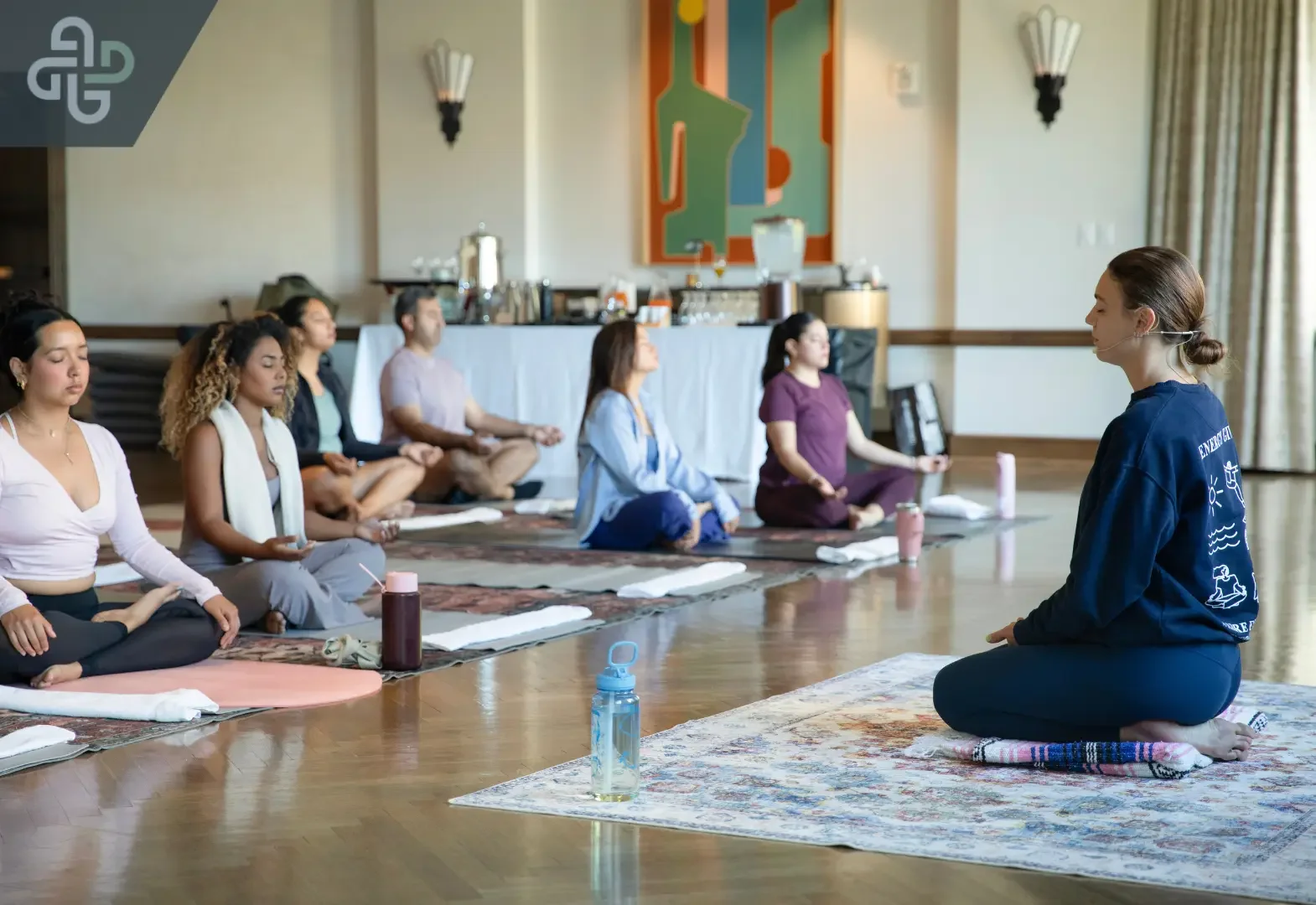
You are not opening a library and scrolling until something looks right. You are not half-deciding whether now is the time. You are joining a class that has already begun to exist. A teacher is there. Other people are there too. The room has a shape to it, even if everyone is joining from home.
That alone can be a relief.
A lot of people do not need more meditation options. They need less decision fatigue. A live class gives them that. The time is already there. The teacher is already there. The practice has already been held open. You just enter it.
Meditation Apps Have Made Mindfulness Accessible
Apps do a lot well.
They are easy. They are private. They fit into weird schedules. If you are exhausted at the end of the day and want ten minutes of breathing without talking to anyone, an app can be exactly right.
That kind of convenience should not be dismissed. It is real, and for some people, it is the reason meditation became possible at all.
But apps also make it very easy to drift.
You save a meditation for later. You try one halfway. You start another and stop after three minutes. You mean to come back tomorrow. Then tomorrow gets full, too.
That is not a flaw in character. It is just what happens when a practice has no real shape around it.
Apps can open the door. They do not always help people walk back through it consistently.
The Biggest Difference: Real Human Connection
This is the part people usually feel before they know how to explain it.
A live class has a person in it.
Not just a voice. A person.
A real teacher is guiding the class in that moment. That changes the energy right away. Even through a screen, it feels different to know someone is showing up live with you rather than playing something they recorded six months ago for whoever might press play.
It feels warmer.
It feels less like content.
It feels easier to trust.
A teacher can set the tone of the room without forcing anything. They can slow things down when people need more space. They can guide in a way that feels grounded instead of generic. They can make beginners feel welcome without making the practice feel shallow.
That is not magic. It is just human presence.
And for something like meditation, human presence can matter a lot.
Why Accountability Helps Build a Consistent Practice
A lot of people blame themselves for not meditating regularly.
But often the problem is not motivation. It is friction.
Meditation is very easy to postpone. Later feels reasonable. Tomorrow sounds fine. After dinner. After work. After the weekend. It slips away so easily because nothing is really holding it in place.
A live class helps with that because it gives the practice a real time to happen.
That matters more than it sounds like it should.
When a class is on the calendar, you do not have to spend fifteen minutes deciding whether this is the right moment. You either join or you do not. That makes the whole thing feel lighter. You are not carrying all the momentum by yourself.
That is one reason teacher-led meditation helps people stay more consistent than solo practice alone. It removes some of the mental load that comes before the meditation even begins.
Learning From Experienced Meditation Teachers
One of the best parts of live classes is that you get to learn from actual people with actual styles.
Not every teacher will feel right for every person. That is normal.
Some teachers are soft and spacious. Some are practical and direct. Some say very little. Some offer more guidance along the way. Some help you drop in quickly. Others are better when you want a slower, more reflective pace.
This matters because meditation is not only about technique. It is also about trust.
When you find a teacher who feels right, the practice often gets easier. Not because your mind stops wandering. Just because you stop fighting the whole thing so much. You know the teacher’s rhythm. You know how they guide. You know you can arrive however you are and still get something from the class.
That relationship is hard to get from an app.
An app may give you a soothing voice.
A teacher gives you an experience you can build on over time.
Community Makes Wellness More Sustainable
Meditation is personal, but it does not always have to feel private in the lonely sense.
That is one quiet thing live classes give people.
You know, other people are there too. You may not speak to them. You may never even see them. But you know, other people have stopped their day, logged in, and chosen to pause at the same time you did.
That shared moment matters.
It is one reason an online meditation community can still feel real. Not loud. Not overly social. Just real.
For a lot of people, that is part of what keeps the habit alive. Meditation stops feeling like something they are supposed to make themselves do in isolation. It starts feeling like a place they can return to.
That makes wellness more sustainable, because support tends to last longer than pressure.
Live Classes + On-Demand Access = The Best of Both Worlds
This is where things get more realistic.
Most people do not need to choose one format forever.
They do better with both.
Live classes help when you want structure, guidance, and a reason to show up at a specific time. On-demand support helps when the day gets messy, the class time does not work, or you just need something shorter and more flexible.
That combination makes sense.
A simple rhythm might look like this:
one or two live classes in the week
one on-demand session on a busier day
a few teachers you come back to often
a little flexibility instead of all-or-nothing thinking
That is often what makes a meditation membership feel genuinely useful. You are not relying on one single way of practicing. You have more than one way back in.
How to Get Started With Live Meditation Classes
The easiest way to start is to stop treating it like a big decision.
Pick one class.
That is enough.
You do not need to know the perfect style for you yet. You do not need to understand every category of meditation. You do not need to feel calm before you join. Most people come to class because they are not calm.
Start with one class from the live meditation classes. Look through the class schedule. Spend a little time with the meditation teachers. If your week changes, keep the on-demand meditation library nearby too.
You do not need a whole new identity around meditation.
You just need a first real experience of being guided well.
Conclusion
Meditation apps are helpful. They made practice easier to reach, and that matters.
But live classes offer something apps usually cannot.
A real teacher. A real hour. A little accountability. A little connection. A space that feels held by another person instead of simply delivered by a tool.
That is why live meditation classes feel different.
Not because apps are useless. Not because one format has to win. Just because being guided by a real person, in real time, can make meditation feel more human and much easier to keep coming back to.
FAQ
Are live meditation classes better than meditation apps?
They are not automatically better in every situation, but they are different. Apps are great for flexibility and privacy. Live classes offer structure, human guidance, and a stronger sense of support. For many people, that makes meditation easier to keep doing.
Can beginners join live meditation classes?
Yes. Beginners can absolutely join live meditation classes. A good teacher does not expect you to arrive already knowing how to meditate. The class is there to guide you, not test you. You can come in exactly as you are and still benefit.
What happens during a live meditation class?
Usually, the teacher welcomes everyone, guides the practice, leaves some space for quiet, and closes the session gently. You follow along from wherever you are. Most classes are simpler and less intimidating than people imagine beforehand.
Do I have to attend every class live?
No. Live classes are helpful for consistency, but they do not have to be your only way of practicing. On-demand sessions can support you on busier days. A mix of live and flexible practice usually works better than trying to be perfect.
Why does community matter in meditation?
Community matters because it helps the practice feel less isolated. Even in a virtual class, knowing other people are showing up too can make meditation feel more real and more supportive. That quiet shared energy can help people return more consistently.