

How Hotels Can Create Wellness Experiences for Both Guests and Locals
Hotel wellness experiences for guests and locals work best when they are easy to join, consistent enough to build a local following, and flexible enough for travelers who may only attend once. The strongest programs use one recurring format, clear access rules, and a wellness partner that can help fill the room.
A beautiful wellness space can still sit empty on a Wednesday night.
That is the practical problem behind a lot of hotel programming.
In-house guests are valuable, but occupancy changes. Arrival patterns change. Some people have dinner plans. Others leave early the next morning. If a hotel builds an entire wellness calendar around whoever happens to be staying that night, consistency becomes difficult.
Locals change the equation.
They can turn a hotel from a place people sleep into a place the neighborhood actually visits.
Why Hotels Are Opening Wellness Programming to the Local Community
Wellness travel is growing, but the bigger opportunity is not only the person who booked a trip specifically to meditate, hike, or visit a spa.
The Global Wellness Institute's 2025 Global Wellness Economy Monitor shows continued growth across wellness tourism and mental wellness. That broader demand is showing up inside ordinary travel, too. People may book a hotel for work, a wedding, or a weekend away and still want a sound bath, meditation class, movement session, or quiet way to reset.
Hotels can serve that guest.
They can also serve the person who lives ten minutes away. That matters because locals bring something occupancy cannot: repeat behavior.
A guest may attend once.
A local may come every Thursday.
Locals make quieter nights more useful
Hotel rooftops, ballrooms, event rooms, pool decks, and lounges often have natural gaps in their weekly schedule.
A recurring wellness session can give those spaces another life.
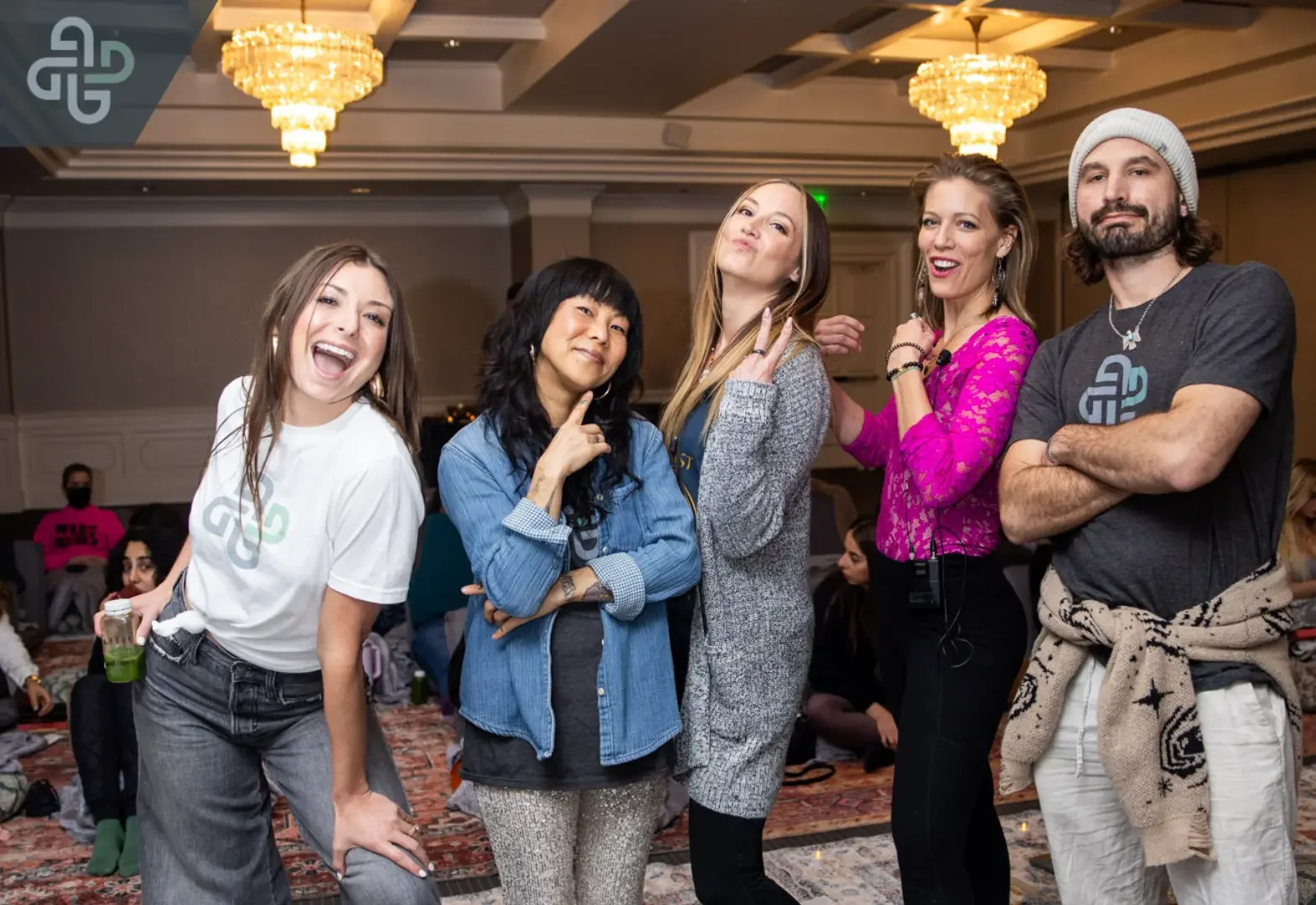
The DEN already runs in-person events in West Hollywood, Santa Monica, Long Beach, Menlo Park, and Palm Springs through hotel partnerships and other venues. The model works because the same experience can welcome the person staying upstairs and the person who drove over after work.
Community presence changes the property's identity
A hotel that only speaks to overnight guests can feel surprisingly disconnected from the city around it.
Open-to-public programming helps change that.
The property becomes somewhere locals know by name. They may first arrive for a sound bath and come back later for dinner, drinks, a meeting, a celebration, or a staycation.
That does not mean every hotel wellness event needs to become a community festival.
It means the front door can open a little wider.
The Dual-Audience Problem, and Why It Is Solvable
Guests and locals do not want exactly the same thing.
A traveler often wants convenience. Something inside the property. No complicated commitment. A session that fits between a meeting and dinner or between checkout and a flight.
A local is more likely to care about consistency.
Who teaches it?
Does it happen every month?
Will the next session feel familiar enough that they want to return?
The overlap is a recurring, drop-in-friendly experience with a recognizable facilitator or wellness partner.
That can be as simple as a monthly sound bath or a Sunday morning breathwork series.
The mistake is trying to build two completely separate programs.
You usually do not need to.
Six Formats That Work for Guests and Locals Together
1. Recurring evening sound baths
Evening sound works well because the value proposition is obvious.
Come in.
Lie down.
Listen.
Leave quieter than you arrived.
For guests, it becomes an easy wind-down without leaving the property. For locals, it can become a recurring ritual after work.
2. Weekend morning movement or breathwork
A rooftop, lawn, terrace, pool deck, or event room can work well for a Saturday or Sunday morning session.
Guests can attend before brunch or checkout.
Locals can build it into the weekend.
The hotel gets daytime energy without needing a full event production.
3. Seasonal and solstice gatherings
Seasonal moments give people a reason to notice the calendar.
A summer solstice sound bath, new-year reset, or end-of-year reflection session can attract both hotel guests and local audiences without pretending the event needs to run every week.
These also work well when a property wants a few larger anchor events around a simpler recurring program.
4. A workshop series with a returning facilitator
One-off classes are easy to book.
A series is better for building community.
Bring the same practitioner back for four or six sessions, and locals start to recognize the experience. Guests still have the freedom to join once.
Consistency makes the program feel intentional instead of random.
5. Member-and-guest hybrid access
Some hotels can connect wellness programming to an existing membership, spa membership, local club, or loyalty offering.
The DEN's own membership with hotel perks is an example of how wellness access can be connected to partner locations and recurring experiences.
The exact commercial model will differ by property, but the principle is useful: recurring access gives locals a reason to return.
6. Community mental health or wellbeing days
Not every event has to be positioned as luxury wellness.
A hotel can partner around a mental health awareness day, community wellbeing event, fundraising moment, or accessible public program.
That gives the property a way to participate in the city beyond room nights and food-and-beverage promotions.
How to Structure Access, Pricing, and Capacity
This is where a good idea becomes an operational one.
A simple model might look like this:
In-house guests: complimentary or included as a stay perk
Locals: ticketed access
Hotel or club members: preferred rate or included allocation
Corporate groups: separate private booking
Last-minute inventory: released publicly after a guest hold expires
One useful approach is to protect a portion of the room for hotel guests until roughly a day before the session, then release unused spaces to the public.
That keeps the amenity genuinely available to people staying at the property without leaving half the room empty.
There is no universal split.
A 30-person room may need a different policy from a 150-person rooftop.
What matters is deciding before tickets go live.
Do not let either audience feel like the backup plan
Guests should not arrive at the front desk and discover the "hotel amenity" sold out weeks ago to locals.
Locals should not feel as if their reservations can disappear whenever a VIP checks in.
Clear inventory rules solve most of that tension.
So does a current schedule that tells people exactly what is happening and where.
Operational Considerations Hotels Underestimate
Wellness programming can be lighter than building a spa.
It is not operationally invisible.
Front desk and security need to know non-guests are arriving
If the event is open to locals, someone needs to own entry.
Where do attendees check in?
Do they need parking validation?
Can they use the elevators?
Will security know why 60 people with yoga mats are walking through the lobby at 6:30 p.m.?
These details are not glamorous.
They are the difference between an event feeling seamless and an event starting with twenty confused people at reception.
Wayfinding matters
A guest can ask the front desk.
A local may have never entered the property before.
Simple signage, a clear confirmation email, and one consistent meeting point prevent unnecessary friction.
Think about sound in both directions
A sound bath needs enough quiet to work.
The neighboring wedding reception may not care.
Check the room above, below, and beside the event space. Look at service corridors. Think about music from the pool deck. Ask what is happening at the same time.
The right room on Tuesday may be the wrong room on Saturday.
Build in setup and breakdown
Practitioners need time to arrive and prepare.
Mats, blankets, instruments, check-in materials, lighting, and room reset all take time.
Do not book the ballroom until 5:55 and expect a 6:00 sound bath to feel calm.
Decide who owns the guest list
Is the hotel taking bookings?
The wellness partner?
A ticketing platform?
A membership team?
Pick one system of record.
Then make sure the front desk has the information it needs.
Marketing to Two Audiences at Once
The hotel guest and the local resident should not discover the event the same way.
For guests, use the moments you already own:
pre-arrival email
booking confirmation
in-room collateral
lobby signage
concierge recommendations
front-desk conversation
hotel app or text message
For locals, think beyond the hotel's own Instagram account.
The wellness partner's mailing list can matter just as much as the venue's.
So can local partnerships, neighborhood newsletters, community calendars, social content, and recurring attendees bringing friends.
This is where working with an operator that already has a local audience can shorten the ramp-up considerably.
A hotel does not have to build a wellness community from zero.
It can partner with one.
For teams building a broader seasonal plan, our guide to wellness calendar planning is also useful even though it was written for workplace programming. The same principle applies: a calendar feels stronger when formats have a reason to be there.
A Hotel Wellness Program Should Feel Like Part of the Property
The best hotel wellness experiences for guests and locals do not feel bolted onto the building.
A coastal property may lean toward sunrise movement, breathwork, and evening sound.
A city hotel may make more sense with an after-work meditation series.
A desert property can build around sunset, heat, stillness, and seasonal gatherings.
The program should sound like the hotel.
It should also sound like the wellness partner.
That overlap is where the experience becomes believable.
The DEN works with hotels and hospitality teams to build a wellness programme for your property, from recurring public sessions to private experiences, retreats, and brand activations.
The goal is not to fill the calendar because the calendar has empty boxes.
It is to create something people are glad is happening again next month.
Frequently Asked Questions
Can locals attend hotel wellness events?
Yes, when the hotel designs the program as open-to-public or hybrid access. Many properties reserve some capacity for in-house guests and sell the remaining spaces to local attendees. Clear booking, entry, parking, and check-in instructions are especially important when non-guests are coming onto the property.
How should a hotel price wellness experiences for guests versus locals?
There is no single model. Hotels may include the session for overnight guests, charge locals a public ticket price, offer preferred access to members, and price private corporate groups separately. The important part is setting capacity rules so the amenity remains available to guests without wasting unsold space.
What is the best space in a hotel for a community wellness event?
Choose a space based on the practice, not only the view. Sound baths need quiet and enough floor space for comfortable seating or mats. Movement may work beautifully outdoors. Event rooms, rooftops, ballrooms, terraces, lounges, and pool decks can all work if noise, access, flooring, weather, and setup are considered.
How often should a hotel run community wellness programming?
Consistency matters more than frequency. A monthly session that guests and locals can rely on may build a stronger following than several unrelated events packed into one month. Start with a cadence the hotel can sustain, then expand once attendance and operations are predictable.
How do hotels market wellness events to the local community?
Use both the hotel's audience and the wellness partner's audience. Local social media, mailing lists, neighborhood partnerships, community calendars, hotel dining channels, and recurring attendee referrals can all help. A partner with an established local community can reduce the amount of audience-building the property has to do from scratch.