

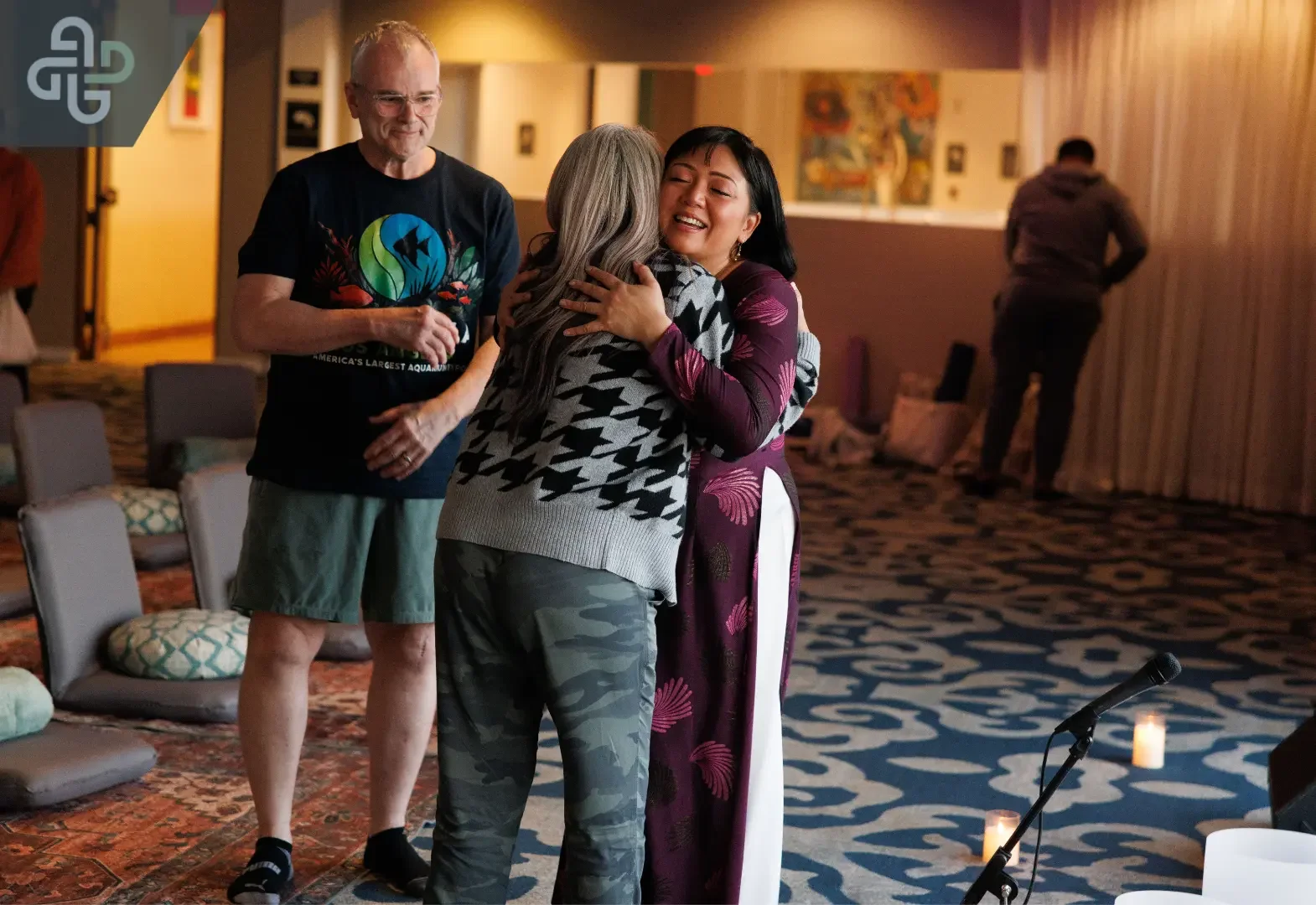
The future of hospitality is being shaped by three forces at the same time: travelers want experiences that feel specific to a place, wellness has moved into ordinary travel, and people are looking for more genuine connection. Hotels that respond well are becoming gathering places, not just places to sleep.
This is not a prediction that every lobby turns into a wellness studio. It is a shift in what creates value. Facilities still matter. So do rooms, service, food, and location. What is changing is the importance of what happens between those things.
Three Forces Reshaping Hospitality at Once
Travel, wellness, and community used to sit in separate departments. Travel was the reason for the stay. Wellness lived in the spa. Community was something the destination marketing team talked about.
Now they increasingly overlap. The Global Wellness Institute reports that wellness trips represented 8.3% of all tourism trips but 17.6% of tourism spending in 2024. At the same time, hospitality research is paying more attention to immersive and participatory experiences. EHL’s 2026 hospitality outlook describes a shift from passive enjoyment toward active co-creation.
Force One — Travel Became About Being Somewhere, Not Seeing It
Travelers still visit museums and landmarks. But a good trip is increasingly judged by what it felt like to be there.
That changes the role of the hotel. A guest who works remotely for part of the day, takes a longer weekend, or returns to the same city may spend more waking hours on-property than the old “sleep and leave” model assumes.
The hotel now competes with the neighborhood for attention while also being expected to introduce the neighborhood well.
Force Two — Wellness Moved From Amenity to Expectation
The old wellness checklist was familiar: spa, gym, pool. Those facilities still matter. They are simply no longer the whole story.
Guests now use language around sleep, stress, recovery, focus, movement, and mental wellbeing. The answer may be a spa treatment. It may also be a guided sound bath at 6 p.m., meditation before meetings, or a short breathwork session after travel.
The shift is visible at industry level too. In August 2026, Therme Group and Marriott announced a strategic alliance focused on next-generation wellbeing experiences, signaling that large hospitality groups are thinking beyond the traditional treatment room.
Force Three — Belonging Became the Scarce Thing
Travel can be highly personalized and strangely anonymous at the same time. You can choose the room, pillow, meal, ride, and playlist without speaking to anyone.
Shared experiences interrupt that isolation.
A sound bath does not require networking. A meditation class does not need an icebreaker. A small movement session can put travelers and local residents in the same room without asking either group to perform “community.”
That is often enough to make a property feel more alive.
Where the Three Meet: The Hotel as a Gathering Place
A single recurring session can answer all three forces at once.
It gives the traveler something to do that belongs to the property. It gives wellness a visible place in the stay. And if locals can attend, it connects the hotel with the city around it.
Programming is the connective tissue because it can move through existing spaces. A ballroom that hosted a sales meeting at noon can host meditation at six. A rooftop can become a Sunday-morning ritual. A terrace can host sound before dinner.
The hard part is not the renovation. It is consistency.
What This Means for Operators
Programming budgets may start behaving more like marketing or guest-experience spend than facilities spend. The return is not only ticket revenue. It may show up in F&B, repeat visits, local reach, guest reviews, group enquiries, or the simple fact that people remember the property for something specific.
It also encourages partnership. Instead of building an internal department for every modality, hotels can work with specialist operators that already have facilitators, equipment, and an audience.
The DEN’s residencies across California are one example of that model in practice.
What It Does Not Mean
Spas are not obsolete. A well-run spa does something scheduled group programming cannot do.
Not every property should open itself to the neighborhood. Some brands depend on privacy and exclusivity.
Programming also cannot rescue weak fundamentals. If check-in is chaotic, rooms are noisy, or service is poor, a beautiful sound bath is not a strategy.
And this is not a quarterly campaign. Community and recurring wellness are multi-season commitments. If a hotel disappears from the calendar every time budgets tighten, guests learn not to rely on the program.
Where to Start
Do not start with “What trend should we copy?” Start with three questions:
When are guests actually on-property with unstructured time?
Which spaces are underused during those hours?
What experience would make sense for this location, audience, and brand?
Then choose one format and run it consistently enough to learn. The future of hospitality will not be won by the property with the longest amenity list. It will be won by properties that know how to make people feel like something real is happening there.
If your hotel is considering recurring wellness or a hospitality partnership, you can talk to The DEN about programming.
Frequently Asked Questions
What are the biggest trends shaping the future of hospitality?
Three important shifts are experiential travel, wellness becoming part of everyday travel, and a stronger demand for belonging and local connection. Technology and personalization matter too, but hotels still need experiences that make the property feel human and specific to its place.
Why is wellness becoming central to the hotel experience?
Wellness travel and spending continue to grow, and travelers increasingly carry wellbeing habits into ordinary trips. That expands hotel wellness beyond the spa into sleep, recovery, meditation, movement, sound, and other facilitated experiences.
What does experiential travel mean for hotels?
It means guests value participation and memory, not only facilities. Hotels can respond by creating experiences tied to the property and destination, from food and culture to wellness programming, local partnerships, and recurring events.
How can hotels build community without a large budget?
Start with existing space and one recurring program. A reliable meditation, sound, movement, or local cultural event can build more recognition than a large one-off launch. Consistency and local partnership usually matter more than production scale.