

Online Meditation Classes vs In-Person
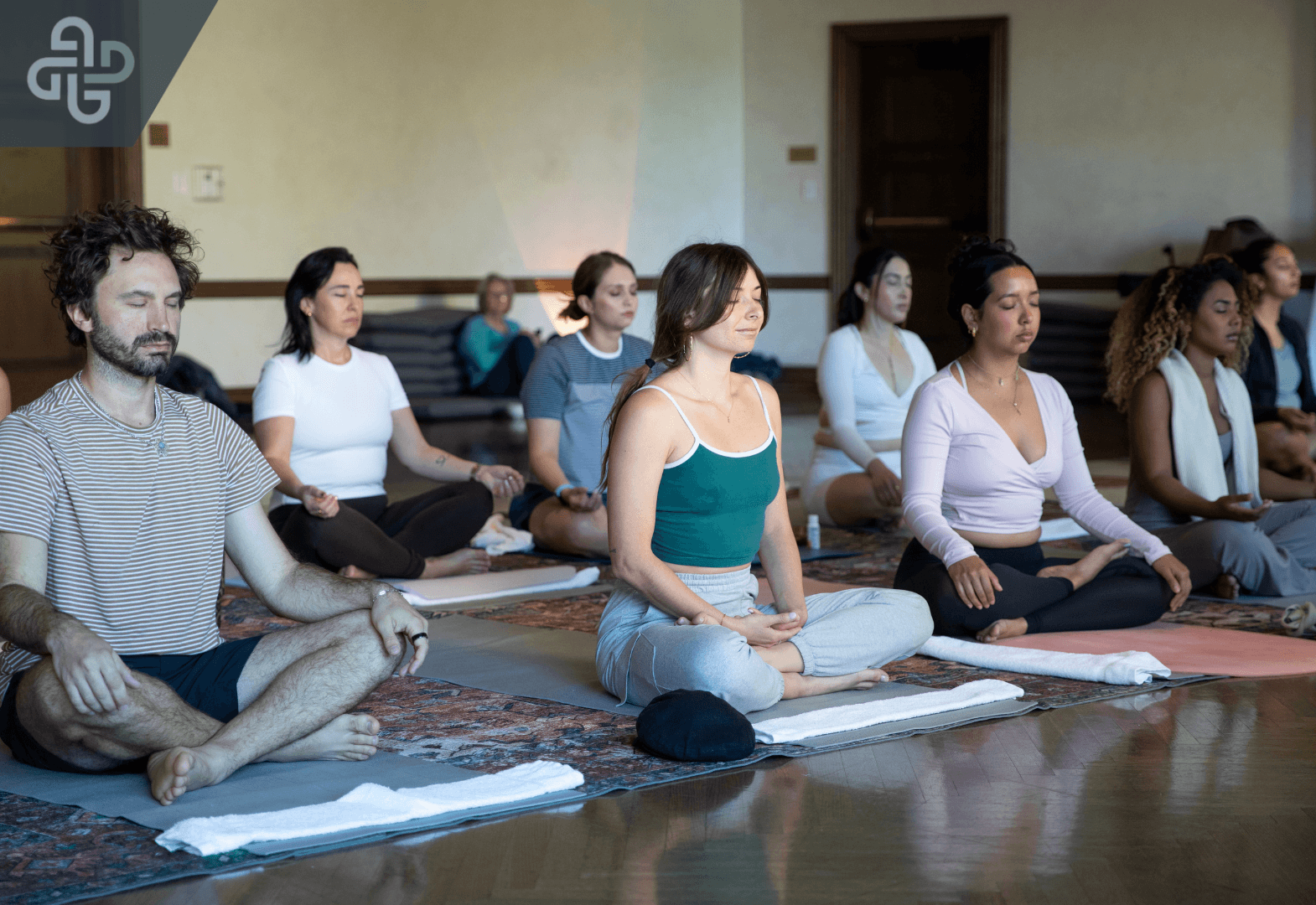
A lot of people start meditation with the same question, even if they phrase it differently.
Should I do this online, or do I really need to go somewhere in person?
It is a fair question. Meditation already asks you to slow down. The format matters because it changes how easy it feels. For some people, logging in from home is what finally makes the practice doable. For others, home is the very place where they cannot settle, and being in a room with other people changes everything.
That is why this is less about which format wins and more about which one actually works for your life.
Why this choice matters more than people think
Meditation sounds simple from the outside. You sit. You breathe. You pay attention.
But the reality is more personal than that. Environment matters. So does timing. So does whether you feel held by a group or relieved to be alone. Research comparing online and in-person mindfulness has found reasons to take both formats seriously. One 2022 study reported similar outcomes from live online and in-person mindfulness training when the program was delivered in real time, while another found perceived stress improved in both formats but life satisfaction improved only in the in-person group.
That tells us something useful. Online is not “less real.” In-person is not automatically “more effective.” But they do not always land the same way.
Online meditation classes: what they do well
For a lot of people, online is the reason meditation becomes sustainable.
Not because it is more spiritual. Usually the opposite. It is more practical.
You do not need to drive anywhere. You do not need to change clothes, find parking, or factor in commute time. If your day is already full, that difference matters.
Some of the real strengths of online meditation classes are:
easier to fit into busy schedules
more privacy for beginners
less pressure if you feel self-conscious in groups
access from anywhere
more chances to build consistency
That is also part of why The DEN’s virtual side works well for many people. Its site says membership includes unlimited live virtual classes plus an extensive on-demand library, and the homepage highlights 25+ live virtual classes each week, along with a library of more than 1000 on-demand classes.
That kind of access can be the difference between “I want to meditate” and “I actually did.”
Where online classes can fall short
Online is convenient, but convenience is not the same thing as depth.
For some people, home is full of interruptions. There is laundry in the corner, a phone nearby, messages waiting, roommates moving around, and a dozen small reasons not to fully drop in. Even when the class itself is good, the container can feel softer.
There is also the human piece. Meditation may be an inner practice, but many people still do better when they feel the presence of others. One 2021 study found that video-guided group meditation strengthened both mindfulness and feelings of social connectedness more than meditating alone, which hints at why shared practice matters.
So yes, online can work beautifully. It just asks a little more from you in terms of boundaries and setup.
In-person meditation classes: what they offer
There is something different about going somewhere on purpose.
You leave your routine, enter a room, settle into a shared pace, and for a little while, the rest of life gets quieter. That shift matters. It is not just aesthetic. For many people, it helps the body understand that something different is happening now.
That is one reason in-person meditation often feels deeper right away, especially for beginners.
Some of the strengths of in-person practice are:
stronger sense of group energy
fewer distractions than home
a clearer beginning and end
more felt accountability
easier access to the community and real-time support
This is also where The DEN’s in-person side stands out. Its membership includes free entry to regularly programmed in-person events, and its site lists offerings across Los Angeles, Long Beach, Palm Springs, the Bay Area, and beyond.
That structure can help people who know they need a room, a schedule, and an intentional pause to really show up.
Where in-person classes can be harder
In-person sounds ideal until real life gets involved.
The schedule may not line up. The location may be inconvenient. The class you want may happen at exactly the wrong time. Some people also find group settings activating at first, especially if they are new to meditation or already feeling overwhelmed.
There is also the energy cost. Getting there takes more effort. That effort can be worth it, but it is still effort.
This is why some people love in-person classes in theory and attend less than they want in practice. The format may be powerful, but if it does not fit your life, it can still become inconsistent.
So which one is better?
Usually, the better one is the one you will actually return to.
That is the less glamorous answer, but it is the useful one.
If you feel calmer at home, have a packed schedule, or want to start privately, online may be the smartest place to begin. If you know you need a stronger container, more accountability, or the grounding effect of being in a room with other people, in-person may help more.
It can also change over time.
A lot of people start online because it feels easier, then add in-person classes when they want more depth or connection. Others begin in person, get comfortable, and then use online classes to stay consistent during busy seasons.
It does not have to be one forever.
A simple way to choose
If you are stuck, this is a better question than “Which one is best?”
Ask: What usually gets in the way of me meditating?
If your main problem is time, friction, or privacy, start online.
If your main problem is distraction, inconsistency, or difficulty settling at home, start in person.
If you want both structure and flexibility, a hybrid setup usually works best.
That is where something like a meditation membership can help. The DEN’s membership combines unlimited virtual classes, an extensive on-demand library, and access to in-person events, which makes it easier to move between formats instead of forcing one permanent choice.
When online is probably the better fit
Online may be the better starting point if:
you are brand new and want to ease in privately
your schedule changes a lot
commuting to class would make practice less realistic
you prefer meditating at home
you want more frequency without more logistics
This is also where on-demand meditation classes make sense. They remove the “I missed the class, so I guess not today” problem. The DEN’s on-demand page describes its library as part of a larger member experience with daily live sessions and thousands of replays.
That kind of option helps people who need meditation to meet them where they are, not the other way around.
When in-person is probably the better fit
In-person may be better if:
you struggle to focus at home
you want a stronger sense of community
you tend to stay more committed when you physically go somewhere
you like real-time support and a more immersive feel
you want the environment itself to help you drop in
For people in Southern California, in-person meditation classes in Los Angeles can offer that extra sense of ritual. Sometimes the room is the thing that teaches your body how to exhale.
What about private meditation classes?
This is the middle path people sometimes forget about.
If group classes feel like too much, but solo practice feels hard to maintain, private meditation classes can be a strong option. They give you personal support without the pressure of a group room. They are especially helpful if you have specific goals, feel intimidated by public classes, or want something tailored to your pace.
Not everyone needs this. But for the right person, it can make the whole practice feel more approachable.
Conclusion
Online and in-person meditation do not have to compete.
They solve different problems.
Online helps when life is full and flexibility matters most. In-person helps when presence, structure, and shared energy are what allow the practice to really land. And for a lot of people, the best answer is not either-or. It is a rhythm that includes both.
If you want something flexible, on-demand meditation classes or a broader meditation membership can give you room to build consistency. If you want a stronger container, in-person meditation classes in Los Angeles may be the better next step.
The right format is the one that helps you keep coming back.
FAQ
Are online meditation classes effective?
Yes, they can be. Research suggests live online mindfulness programs can reduce stress, and some studies have found outcomes comparable to in-person delivery when the program is taught in real time. The main difference is not that online “doesn’t work.” It is that some people need a stronger environment to stay engaged.
Is it better to meditate in a class or alone?
That depends on what helps you stay present. A class can provide structure, accountability, and a sense of shared energy. Practicing alone can feel more flexible and private. If you tend to drift or avoid practice, a class often helps. If you value freedom and quiet, solo practice may fit better.
How often should you attend meditation classes?
There is no perfect number. Once a week is enough for many people to build rhythm, especially if they practice a little between classes. Others do better with shorter, more frequent sessions. The better question is what pace you can realistically maintain without making meditation feel like another task.
What should I look for in a meditation class?
Look for a format that matches your real life, not your idealized life. Pay attention to the teacher’s tone, the pacing, whether the class feels accessible, and whether you leave feeling more settled. For some people, live support matters most. For others, flexibility and ease of access matter more.
Can beginners join online meditation classes?
Yes. In fact, online can be a very comfortable entry point for beginners because it offers privacy and less social pressure. It helps if the class is clearly guided and easy to follow. A good beginner format should feel welcoming, not like you are already supposed to know how to meditate.